Bishop Baraga
Early Life and Call to Mission
1797
A Wealthy Beginning: Born June 29, 1797, in Slovenia, Frederic Baraga was highly educated in law, languages, and the arts.
1821
Ordination: He entered the seminary in 1821 and was ordained on September 21, 1823.
1828
A New Direction: Despite a secure future as a pastor in his homeland, he felt called to American missionary work in 1828.
Arrival in the New World
1831
First Missions: Baraga arrived in Cincinnati in January 1831 and quickly began working with the Indians of lower Michigan at Arbre Croche (Harbor Springs).
Language Master: Though he initially used an interpreter, he soon mastered the Ottawa and Chippewa languages.
1832
The Printed Word: In 1832, he published his first Indian Prayer Book in Detroit to better share his message.
Expanding the Frontier
1836
Upper Michigan and Beyond: By 1832, he expanded into Upper Michigan, and by 1836, his work reached Wisconsin and Minnesota.
1843
The L’Anse Mission: After years of persistent invitations from settler Pierre Crebassa, Baraga established the mission at L’Anse in 1843.
1845
Holy Name of Jesus: In 1845, he dedicated the Holy Name of Jesus Church at the site now known as Assinins.
Purchasing Land: Bishop Baraga purchased over 500 acres of land in the names of the local Native Americans, securing their status as landowners to prevent their removal.
The First Bishop and the "Snowshoe Priest"
1853
First Bishop: In 1853, Frederic Baraga was elevated to become the first Bishop of Upper Michigan.
1854
and beyond
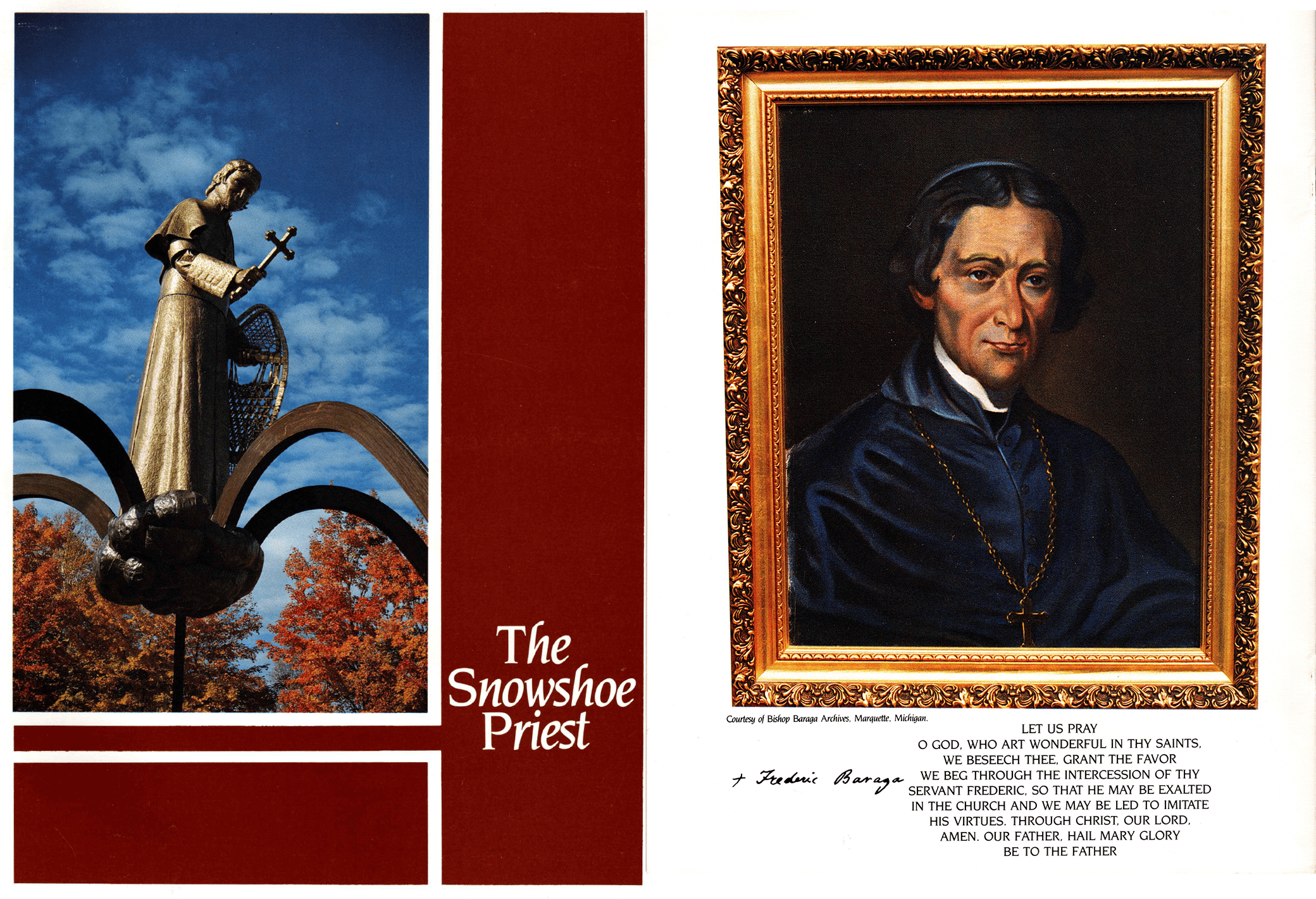
A Legendary Title: To visit his vast jurisdiction during heavy snowfall, the Bishop traveled on foot. His ability to trek over 700 miles in a single winter earned him the title "Snowshoe Priest".
Enduring Legacy: Today, his name is preserved through Baraga County, the village of Baraga, and the historical shrine that overlooks the lands he served.